Somewhere around 11 a.m. on Saturday, the phone is in your hand again. You don't remember picking it up. The kettle is on, the light is good, and the morning — the one you had vague, pleasant plans for — has quietly thinned out into a scroll.
This checklist is not a digital amnesty, and it isn't a productivity challenge. It's a set of small decisions made in advance, so that when a quiet moment arrives, your attention has somewhere to go. Read it on Friday. Adjust it to your life. Keep the parts that make the weekend feel longer.
Start on Friday, not Saturday
By Friday evening, your willpower has already been spent on the week. Saturday morning is a bad time to start negotiating with yourself about how much you'll use your phone; you'll lose, and you'll lose pleasantly, on the sofa, with a coffee going cold. So make the decisions while you still have some distance from them.
- Decide where the phone sleeps. A drawer in another room, a shelf in the hallway, a bag by the front door — anywhere that requires you to stand up and walk.
- Write down three things you'd like to do this weekend that need no screen. Be specific: not "go outside" but "walk to the market and buy the good bread". Specific plans survive.
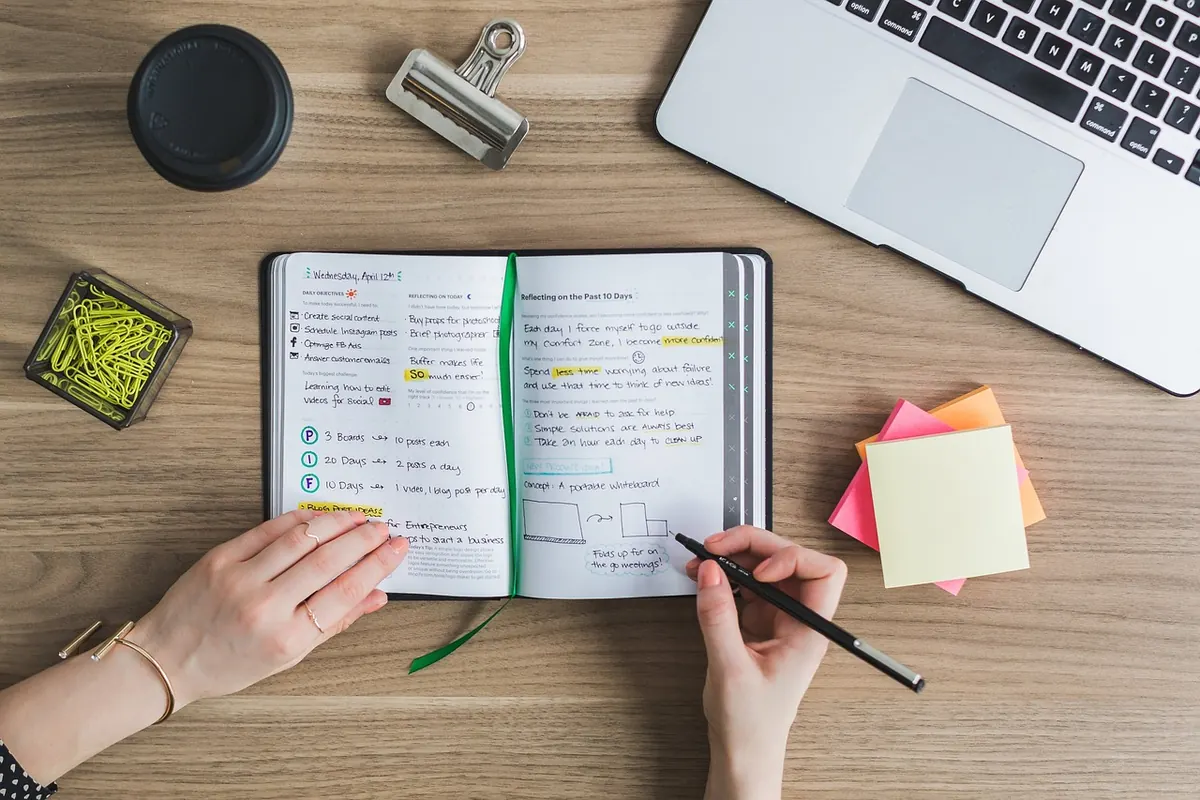
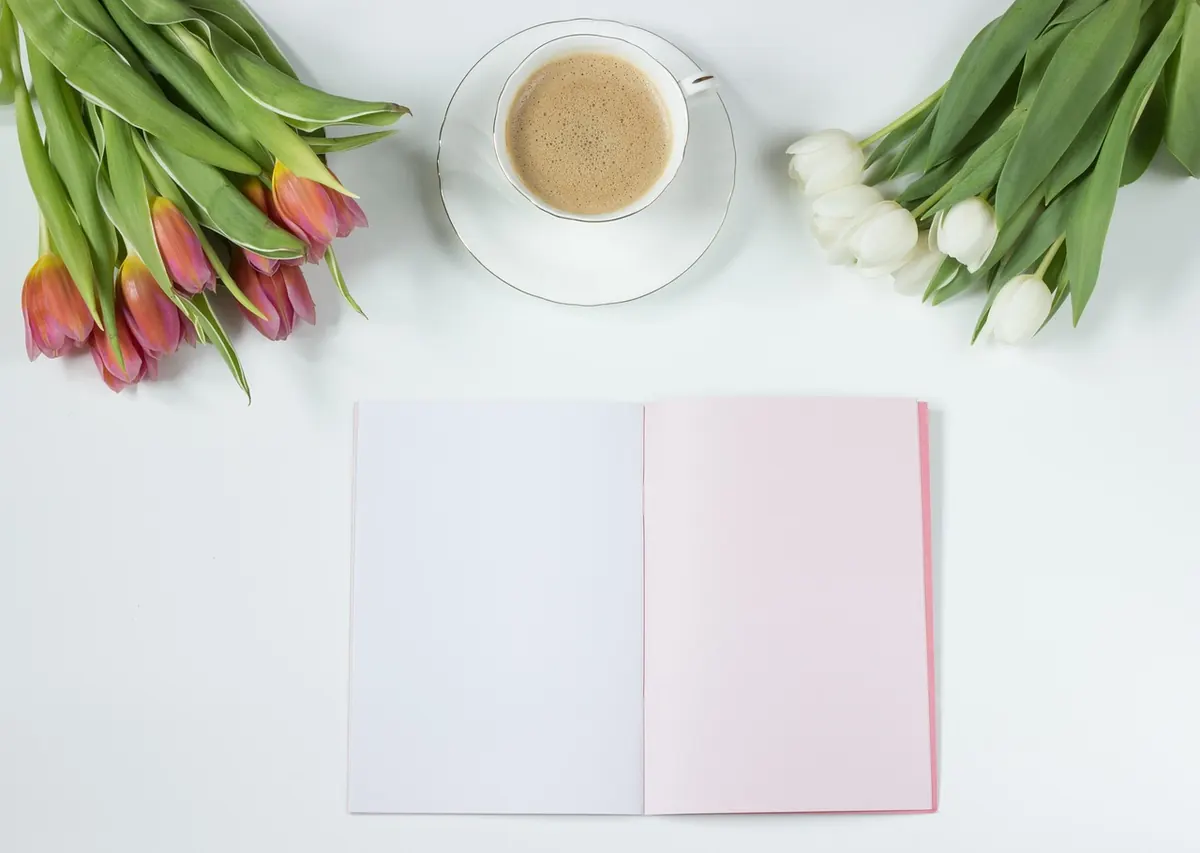
- Clear one surface and stock it: paper, a pen or pencil, and whatever you like to make things with. A cleared table is an invitation; a cluttered one is a closed door.
- Turn off non-essential notifications now. Doing it mid-weekend means doing it while you're tempted to argue with yourself.
- Tell one person what you're attempting. Not as an announcement — as a small, friendly commitment.
The logic is simple: Saturday-you should not have to decide anything twice.
Saturday's first ninety minutes
Try to get through the first hour and a half without a screen, and fill it with things that use your hands and your feet. Make coffee and actually watch it brew. Step outside and check what the weather is doing, rather than what the app says it's doing. Eat breakfast at a table. If you have a garden, a balcony, or a windowsill with something half-dead on it, water it.
The first twenty minutes are the strangest. Your hand will go to your pocket a few times out of pure habit, the way it reaches for a light switch in a room you know is dark. That's not a moral failure; it's a reflex, and reflexes fade with a couple of days of not feeding them.
Make the phone inconvenient, not forbidden
Forbidden things glow. A phone you have sworn off becomes fascinating by lunchtime. Instead, make it mildly annoying to reach: in another room, inside a bag, face down under a book, on a shelf above eye level. Distance beats discipline almost every time, because distance gives you a pause, and a pause is where the choice actually lives.
Leave room for boredom
When you notice you have nothing to do, wait twenty minutes before filling the gap. That's the whole rule. Boredom is a threshold, not an emergency.
The first five minutes are restless — you'll tidy something pointless, you'll reread a label. Then something shifts. A thought you left unfinished on Wednesday finishes itself. You notice the ivy has started climbing the drainpipe. You pick up the pencil because it's there. Most creative work begins in exactly this unglamorous gap, and it can't start if the gap is always filled.
Worth being strict about one thing: don't fill the gaps with audio either. A walk without a podcast, a queue without a video, a bus ride with the window down. Silence is where you hear your own half-formed ideas, and half-formed ideas are the raw material for everything else.
Give your hands something to do
Creative play over a weekend works best when it's small, unfinished, and slightly pointless. No project plan, no output, no posting. Thirty to sixty minutes is plenty.
- Fill one page of a notebook with anything — a sketch of the kitchen chair, a list of overheard sentences, a map of a street you know. No erasing.
- Cook something with a long, slow middle: a pot of beans, a sauce that simmers, a loaf that needs to rise twice. Waiting is part of the recipe.
- Take twenty-four photographs and then stop, as if you had a roll of film. Constraint makes you look harder.
- Learn four chords badly. Play them until they stop sounding like an apology.
- Write a letter by hand to someone who won't be expecting one. It doesn't have to be good, and you don't have to send it.
- Walk your usual route in the opposite direction and notice which houses you've never actually seen.
Finished badly is fine. The purpose isn't the object at the end; it's the hour in which your attention was pointed at one thing.
When you do pick it up
This isn't a monastery. You'll check messages, look up a train time, send a photo to your sister. The trick is to pick the phone up on purpose rather than drift into it.
- Name the reason before you unlock it: "weather", "reply to Marco", "buy the tickets". Close it when the reason is done; if you can't name a reason, put it back down.
- Give yourself two windows a day — say, after lunch and after dinner, fifteen minutes each. Outside those windows, the phone stays wherever you parked it on Friday.
- Try grayscale for the weekend. It's a small setting with an outsized effect: a duller screen is easier to put down.
- Keep it out of the bedroom. A separate alarm clock is one of the kindest changes you can make to a weekend morning.
- If you lose forty minutes to a video spiral, don't write off the rest of the day. Reset at the next hour, not on Monday.
Sunday evening, gently
Sunday evenings can turn into a quiet panic — half a weekend left, so we cram it with screens and call it rest. Try the opposite. Put the phone away by a set time, say eight o'clock, and spend ten minutes preparing for Monday on paper: three things you want to do first, one thing you're dreading, and one thing you're looking forward to. Then close the notebook.
Before you sleep, name one specific thing from the weekend — the smell of the bread, the light at four in the afternoon, the bit of the walk where the street opened up. Specific is what makes a weekend feel like it happened.
The checklist, in short
Copy this onto paper on Friday and keep it where the phone usually sits.
- Phone sleeps outside the bedroom
- Three specific screen-free plans written down
- One clear surface with paper, pen, and materials
- Notifications off
- No screen for the first ninety minutes of Saturday
- Two fifteen-minute phone windows per day
- Twenty minutes of nothing before filling a gap
- One piece of small, unfinished creative play
- Phone away by eight on Sunday
Keep the version that fits your life; a checklist you resent is a checklist you'll abandon. And don't treat the weekend as a test you can fail. A few hours less scrolling isn't a moral achievement — it's time returned to you, which you can spend on a page, a loaf, a conversation, or a walk that goes one street further than usual.
Photo: lrainero / Pixabay