Walk into two home studios on the same street and you might doubt they belong to the same species. The first is a bare desk, a lamp, a laptop and a chair pushed in square. The second has three pinboards, a shelf of half-finished objects, paint chips taped above the monitor and a plant that has clearly won an argument. Both owners will swear the room is why the work gets done.
There is no prize for guessing which one is more productive, because the question is badly framed. A workspace is not decor with a desk in it. It is a set of cues and frictions that either pull you toward the work or quietly push you away. Minimalism and maximalism are two strategies for arranging those cues, and each one solves a problem the other creates.
What a Bare Desk Actually Buys You
The strongest argument for minimalism is not aesthetic. It is attentional. Every object in your field of view asks a small question — are we dealing with me? — and answering it costs something, even when the answer is no. A clear surface means fewer of those micro-decisions: no hunting for the pen, no deciding which notebook, no half-second glance at the stack of mail that turns into four minutes.
For work that is already loud in your head, an empty room works like a wall to lean on. If you are mid-draft, debugging something stubborn, or rehearsing an argument, a large plain surface and one lamp can feel like a corridor with the door shut.
The trap is that blankness can turn into a stage. A desk with nothing on it starts to feel like a blank page with a bill attached, and tidying becomes a respectable form of avoidance: aligning the keyboard, wiping the screen, re-coiling a cable you will never coil again. The other failure is stripping too much. If your tools live two steps away in a closed drawer, every short burst of work now begins with a small chore, and short bursts are where most real progress happens.
What a Crowded Desk Does Better
Maximalism functions as external memory. Ideas rarely arrive on schedule; they arrive because two things happen to sit next to each other. A colour swatch beside a photograph of a bridge beside a sentence you copied out by hand. For visual and associative work — illustration, product design, writing that needs texture — keeping references in sight shortens the distance between “I remember something” and “there it is.”
Clutter, though, is not automatically inspiring. A crowded desk is also a queue of unfinished business, and some of what sits on it is not an idea at all. The router you keep meaning to return, three chargers, a stack of receipts, a conference badge from last spring: those are tasks wearing a costume. They generate the feeling of work without any of the momentum.
Everything on your desk is either pulling you into the next hour or quietly asking you to do something else.
Sort Your Stuff by Cue, Not by Count
The useful distinction is not how much sits on the desk but what each item does when you glance at it.
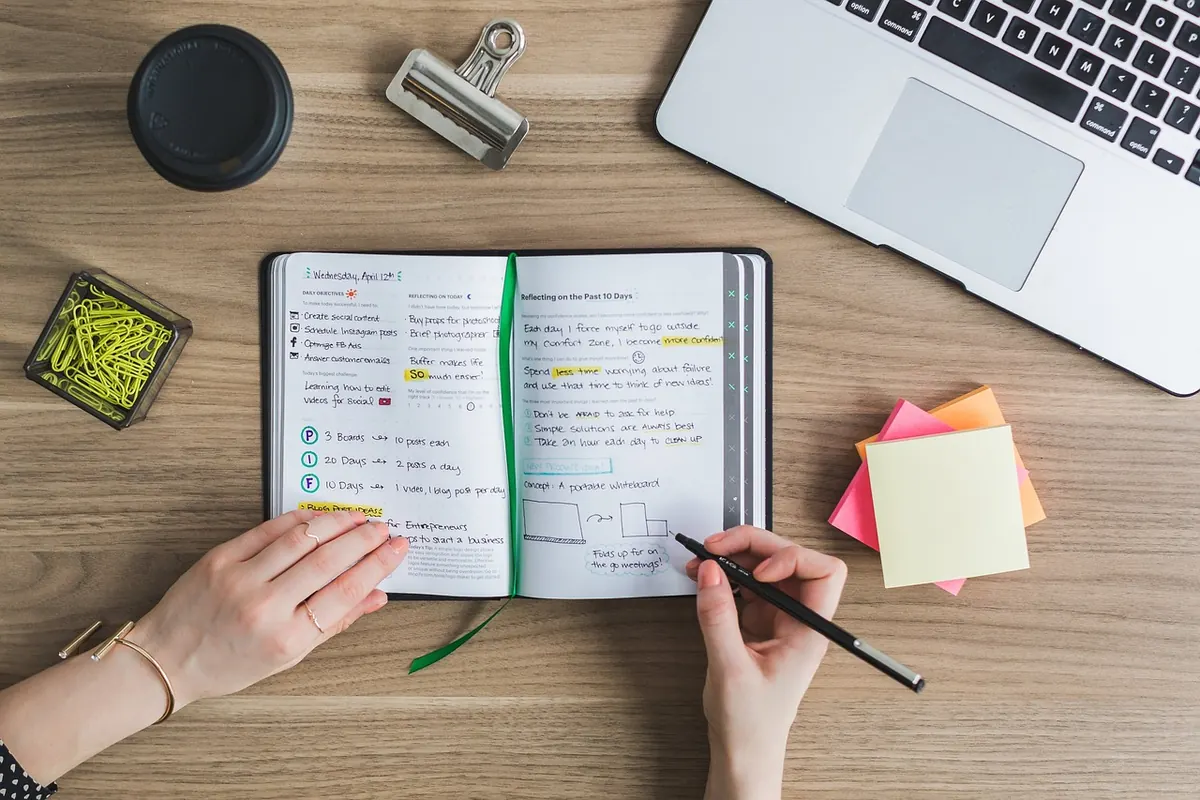
- Live cues: the notebook open to today's page, the object you are sketching, the material samples for the project in front of you, a single index card with the next three steps.
- Dead cues: unopened mail, the broken headphone, the book you have not touched since January, anything that makes you feel behind rather than curious.
- Useful but invisible: spare cables, extra pens, reference files, the stapler. These belong in a drawer within arm's reach, not on display and not across the room.
A maximalist desk done well is mostly live cues. A minimalist desk done badly is empty space on top and chaos in the drawers.
Match the Setup to the Phase of the Work
No single arrangement suits an entire project, because projects have moods. If you sketch out the phases you move through, you can change the room instead of fighting it.
- Gathering. Let it sprawl. Give notes, printouts, samples and clippings a tray or a whole table and resist tidying daily. The mess is the raw material.
- Mulling. Strip it down. Blank wall, plain surface, low visual noise, so your own thinking is the loudest thing in the room.
- Making. One project within reach, everything else out of sight. Turn the other stack around or drop a cloth over it.
- Finishing. Narrow further: one file, one checklist, phone in another room. Finish is a different skill from start.
- Recovering. Clear the surface back to zero at the end of a project, so the next phase does not begin inside the last one.
Many people need this shift within a single week, not just across months. A Tuesday spent drafting and a Thursday spent collecting references can justify two different desks.
A Three-Day Test Instead of a Personality Quiz
Taste is a poor guide here. Photographs of beautiful desks tell you nothing about whether you would get anything done at one. Test it instead.
Start with a normal working day and photograph your desk at eleven in the morning and again at four. Note what you actually touched. Most people discover that the majority of what is out was never used, which is useful information: those objects are decoration or guilt, not tools.
Then give the plain version two days. Put the current project on the surface, everything else in a box behind your chair, and pay attention to whether you feel calmer or restless by mid-afternoon. After that, give the busy version two days: board up, references out, samples within reach. Choose based on which days you started faster and stopped later, not which setup looked better in a photo.
A Hybrid That Does Not Turn to Soup
Most people end up in the middle, and the middle can be designed rather than defaulted into. Three zones do most of the work.
A clear working surface. Nothing but the current project, big enough for a laptop and a notebook. This is the calm half of the room and it stays calm.
One deliberately busy wall or board. Let it be chaotic. This is where the maximalist energy lives, out of reach of your hands. Re-tape it once a month and remove anything that no longer earns its place.
The drawer of purgatory. Things you cannot throw away and do not need go here for a month. If you have not opened the drawer for them, they were never really yours to keep.
Add two habits and the system holds. Take fifteen minutes once a week to clear dead cues and refill the pen pot. At the end of each working day, spend two minutes returning the surface to one live cue — the notebook, open to tomorrow's first task.
Start With the Surface You Actually Touch
You do not need to pick a tribe. Begin with the one square metre in front of your chair. Take everything off it and put it in a box, without deciding yet what to keep. Then put back three things only: whatever you are working on, something to write with, and one live cue that makes you curious.
Work there for a week. If you keep reaching into the box, those things are tools and they belong within reach. If you forget the box exists, you have your answer about how much your desk was really contributing. The best desk is not the emptiest or the busiest. It is the one where the next hour is obvious.
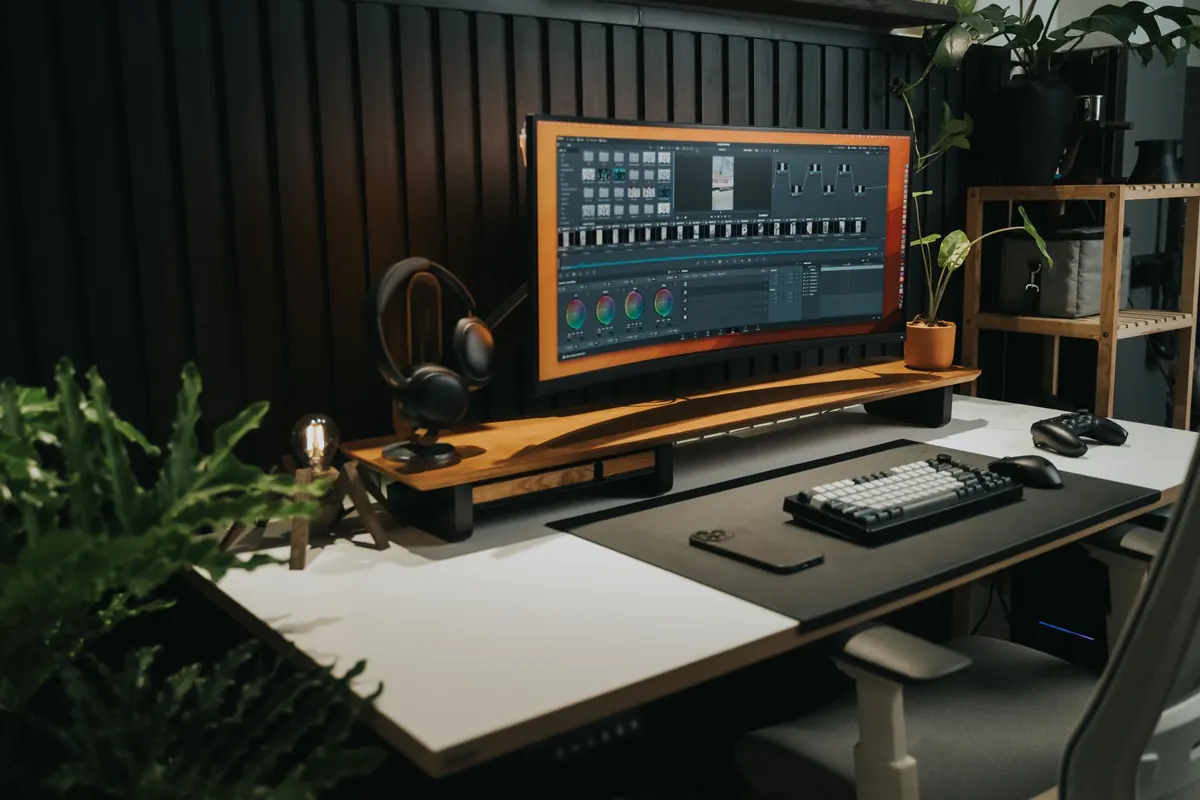
Photo: minhphuc .workspace / Pexels