Sunday evening has a particular texture. The weekend is still warm behind you, but the week ahead is already sending up a low hum: the meeting you haven't prepared for, the draft that's half-finished, the email you keep forgetting to answer. Most people respond by either ignoring the hum or trying to solve everything at once, which is how a fifteen-minute tidy-up becomes a three-hour planning session that ends with a colour-coded calendar you abandon by Tuesday lunchtime.
This is the alternative. Fifteen minutes, one page, one priority, two calendar blocks. Nothing to buy, no system to learn, nothing to maintain. The aim isn't to schedule every hour of the week. It's to walk into Monday with a clear desk, a quieter head, and one piece of creative work that already has a time and a place.
Clear the Surface Before You Clear the Schedule
Minutes one to four. The desk, the browser, the phone screen — none of these are the real problem, but they're the loudest reminder of it. A pile of paper doesn't take an hour to deal with. It takes ninety seconds to move into one tray, and the effect on Monday morning is out of all proportion: you sit down and start, instead of sitting down and sighing.
Do a fast pass on four things:
- Your desk. Anything that doesn't belong to the work you're doing this week goes in a drawer, a bag, or the recycling.
- Your browser. Close every tab you aren't actively using. If something matters, put it in a single note instead of leaving the tab open as a promise.
- Your notes. One glance for anything genuinely urgent you've forgotten. Most of it can wait two minutes for the head-dump below.
- One small annoyance. The dead plant, the unreturned library book, the cable that's been in the wrong place for a fortnight. Fix it now or write it down.
Don't organise. Don't file. The goal is simply a surface you can put a notebook on.
Empty Your Head Onto One Page
Set a timer for four minutes and write down every open loop you're carrying: tasks, half-decisions, things you promised someone, things you promised yourself. Include the small ones. The dentist form and the birthday card take up the same mental shelf space as the big project, and that's precisely why they're worth removing.
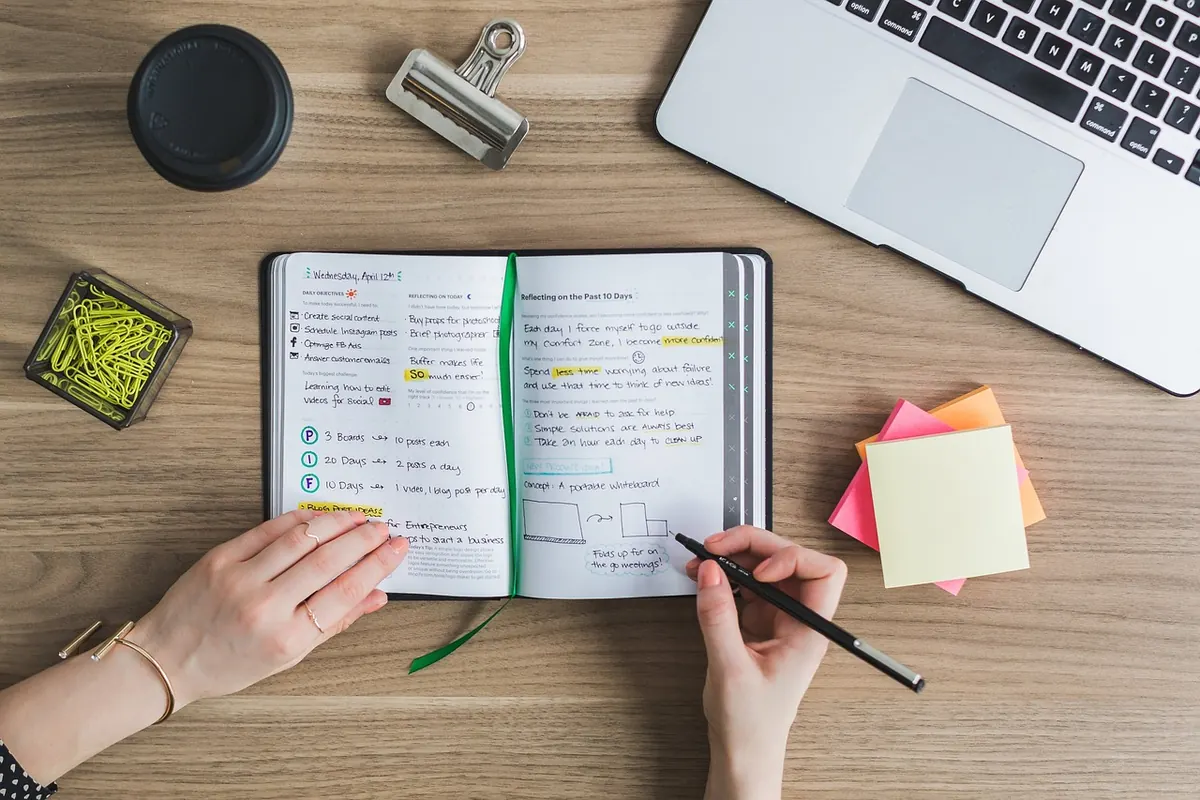
When the four minutes are up, go back through the page with a pen and mark it in three ways:
- A dot for anything that genuinely belongs to this week.
- A dash for anything real but not urgent — it moves to a "later" list you keep somewhere out of sight.
- Nothing at all for the rest, which is usually a third of the page: worries dressed up as tasks, things you're not going to do, ideas you like the sound of but won't touch.
That third category is the useful one. Seeing it on paper is often enough to let it go, at least until next Sunday.
Choose One Creative Priority — Not Three
A creative priority isn't the same as your biggest task. It's the piece of work that, if it moved forward, would make the week feel like it counted. A simple test: imagine it's Friday evening. What one thing would you be quietly pleased to have finished or pushed along?
Then write it as a finished object, not a direction. "Work on the writing" is a mood. "A rough draft of the newsletter essay" is a target you can miss or hit. "Get better at illustration" is a wish. "Three pages of thumbnails for the poster series" is something you can put in a calendar.
Pick one. Not two, not one plus a small one that quietly becomes the real one. If you have a strong runner-up, park it in a line underneath with the words if the week goes well in front of it. That's not a second priority; it's a reward for a week that behaves.
The week doesn't need a plan. It needs one thing that already has a time.
Fence Off Two Blocks Before You Close the Laptop
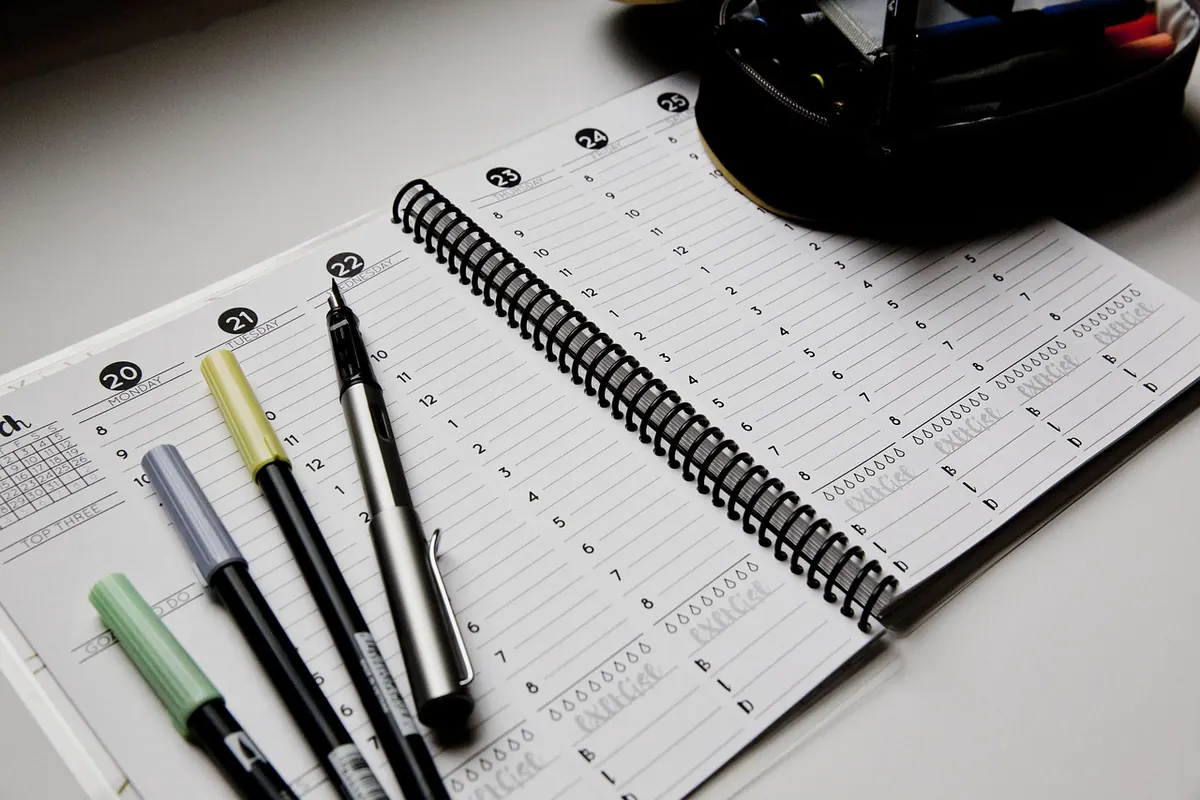
Now give the priority somewhere to live. Open your calendar and place two blocks: one long one of sixty to ninety minutes, and one shorter backup of about forty-five. Name them after the work itself — "newsletter draft" tells future-you what the time is for, while "focus time" invites you to fill it with email.
Two practical notes. First, put the long block where your attention is actually decent, which for most people isn't straight after lunch on a Monday. Second, assume one of the two will be broken by a meeting, a crisis or a bad night's sleep. That's exactly why there are two. One surviving block is a good week, not a failed one.
Name the First Small Move
The last two minutes are for a single sentence. Not a plan for the block — just the first physical action: open the document and write the worst possible first paragraph, or sketch four rough layouts badly. Something so small it would be embarrassing to postpone.
Then set up for it. Leave the file open on the screen. Put the notebook and the good pen where you'll sit. If the work needs a reference image, a printout or a particular playlist, deal with that now, while you're still standing. Friction removed on Sunday is friction you don't have to argue with on Tuesday.
The Checklist, in One Place
Here is the whole reset, in order, for the weeks when you want to do it without thinking:
- Clear the desk. Bin, drawer, tray. Ninety seconds.
- Close the tabs; park anything worth keeping in one note.
- Write every open loop on a single page, four minutes, timer on.
- Mark the page: dot for this week, dash for later, nothing for the rest.
- Choose one creative priority and phrase it as a finished object.
- Park the runner-up under if the week goes well.
- Put two named blocks in the calendar — one long, one backup.
- Write the first small move in one sentence.
- Set the materials out so starting requires no decisions.
- Stop. Fifteen minutes is the whole thing.
Make It Stick Without Making It Heavy
The ritual only works if it stays small. The moment you add a review of your goals, a habit tracker and a colour system, you've built something that needs its own maintenance, and it will be the first thing to go in a busy week.
So keep three rules. If Sunday gets away from you, do the reset on Monday morning before you open your inbox — it takes a quarter of an hour and still counts. Don't add steps; if you want to change something, replace a step rather than adding one. And at the end of the week, ask a single question: did the priority get touched? If yes, note what helped. If no, look at whether the blocks were realistic rather than deciding you need a stricter system.
Most weeks, nothing dramatic will happen. You'll clear a desk, write a page, book a couple of hours and start something on Tuesday instead of Thursday. Do that thirty or forty times and the work accumulates quietly, which is how creative work usually gets made.
Photo: rayedigitaldesigns / Pixabay